
Manual vs Automated Payroll: Why Modern Businesses Are Making the Switch
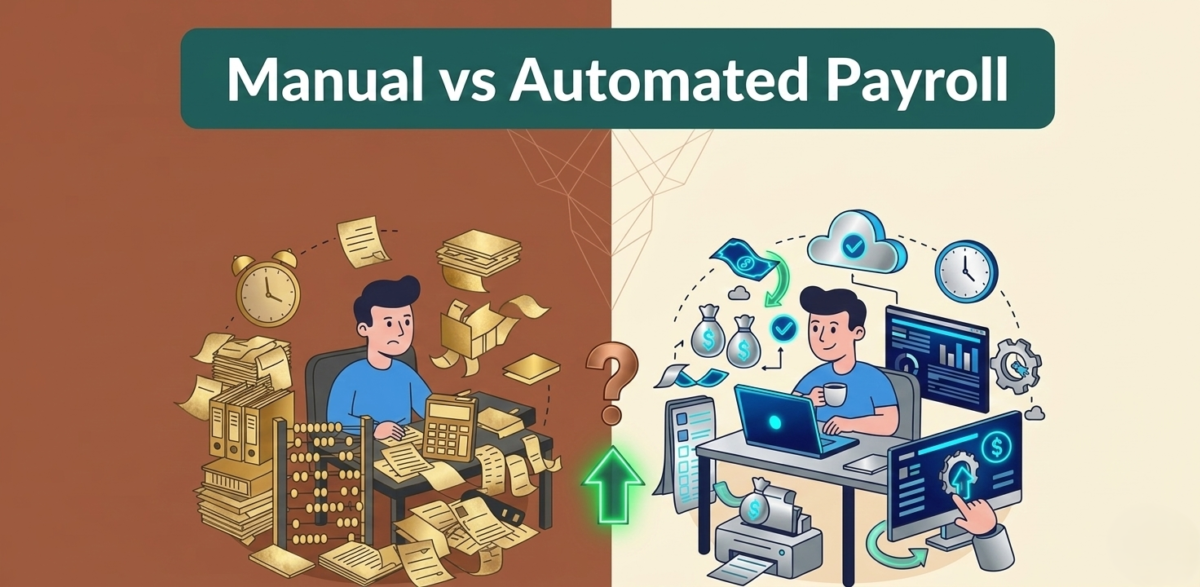
Payroll used to be administrative.
Now it’s strategic.
In 2026, payroll management is no longer just about calculating salaries. It involves regulatory compliance, employee trust, global workforce management, data security, and scalable operations.
And here’s the reality:
Payroll systems that are done by hand just can’t keep up.
Forward-thinking companies are moving toward payroll automation and AI-powered payroll systems not because it’s trendy but because remaining dependent on manual systems has become a competitive risk.
If your organisation still relies on spreadsheets, disconnected tools, and manual calculations, you’re not reducing costs. You’re accumulating operational risks and compliance liabilities.
Let’s explore why modern organisations are transitioning rapidly to automated payroll systems and why delaying the shift may cost far more than adopting it.
The Hidden Cost of Manual Payroll
Manual payroll often appears manageable. Teams know the process; the spreadsheets look familiar, and the system “works” most of the time.
Automated payroll solutions provide efficiency and accuracy that manual systems simply cannot match.
The adoption of automated payroll not only simplifies the payroll process but also mitigates risks associated with manual entries.
But familiarity often hides friction.
Spreadsheets break. Formulas fail. Compliance rules change frequently. Tax slabs update. When organisations scale across multiple states or international markets, payroll complexity increases exponentially.
The risks remain invisible until they become critical.
A delayed salary cycle can damage employee trust.
A tax miscalculation can trigger compliance scrutiny.
Missing statutory updates can lead to regulatory penalties.
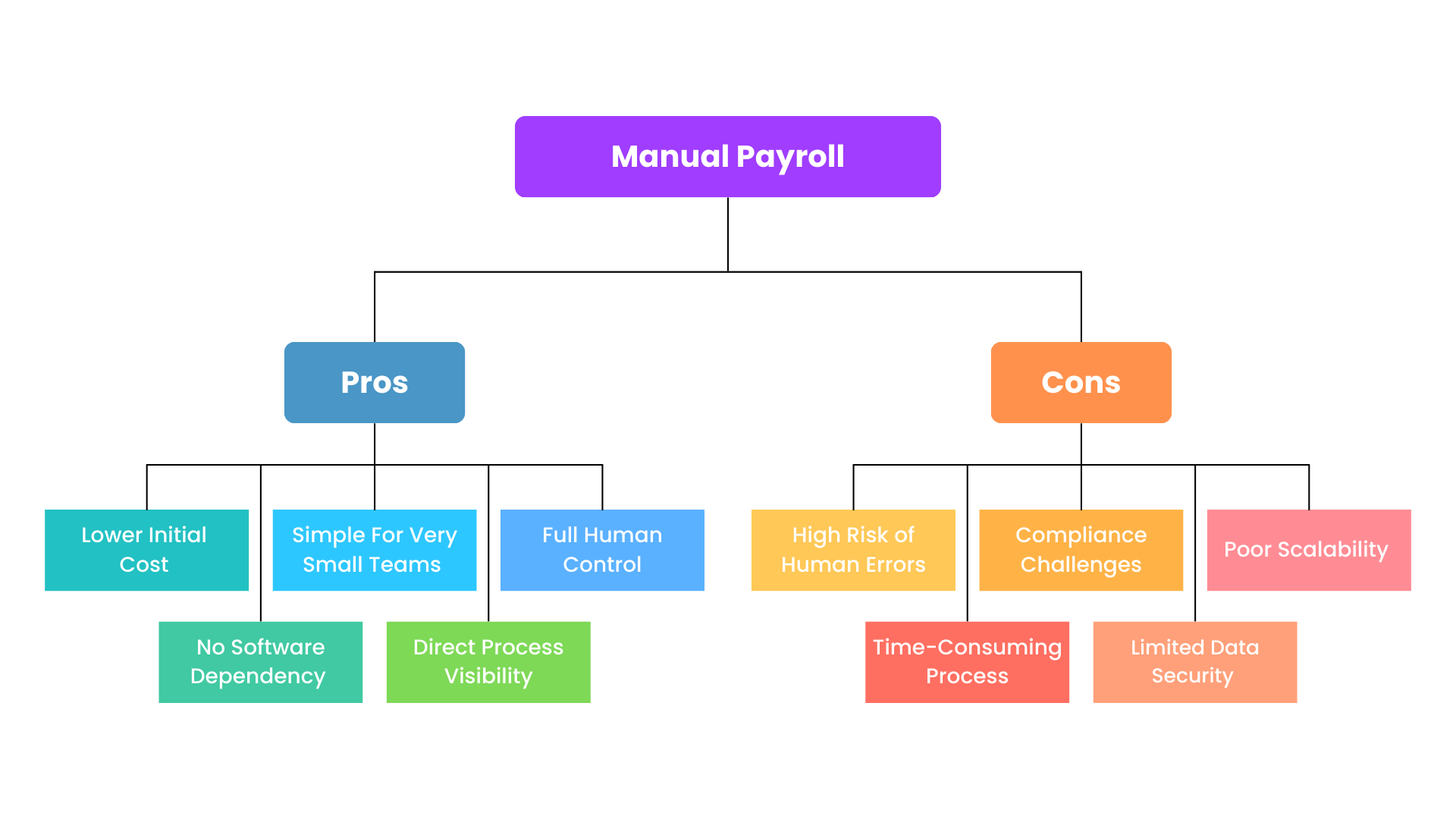
Manual payroll systems struggle with the following:
- Scaling across locations or countries
- Real-time compliance updates
- Audit-ready financial reporting
- Payroll data security
- Integration with HR and finance systems
In growing organisations, payroll mistakes are more than operational issues; they affect employee retention, brand credibility, and financial transparency.
This is why many companies are shifting to AI-powered payroll automation and cloud-based payroll management platforms designed to support scale and compliance.
Payroll Automation Is Not Convenience; It’s Control.
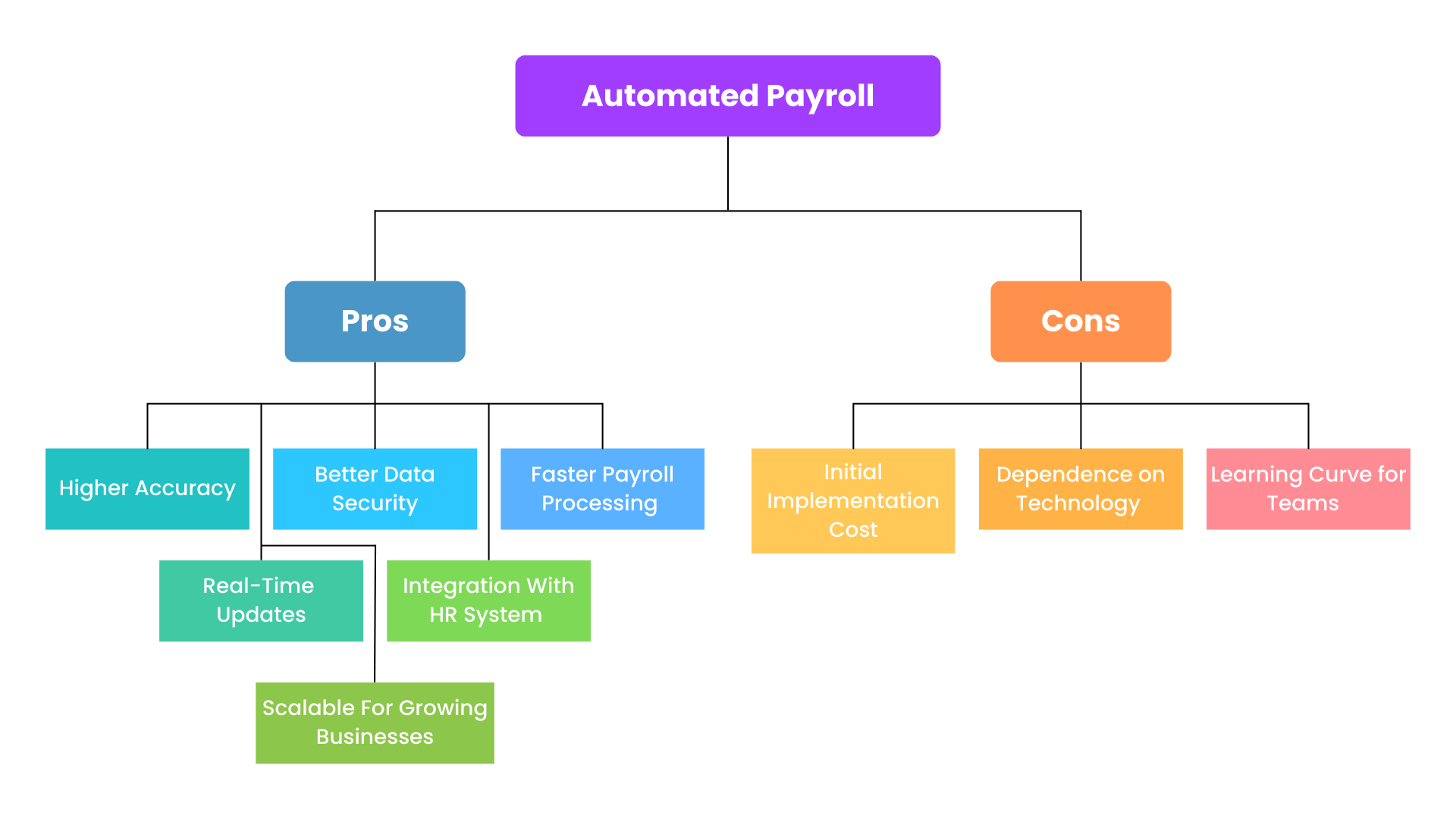
Modern automated payroll systems do far more than calculate salaries faster.
They centralise workforce data, automate compliance checks, and reduce dependency on manual inputs.
With payroll automation:
- Tax calculations update automatically.
- Compliance rules adapt in real time.
- Payroll integrates with HR, attendance, and accounting systems.
- Reports become audit-ready instantly.
- Multi-country payroll becomes structured and manageable.
The difference is not incremental; it’s transformational.
Modern payroll platforms combine cloud infrastructure, intelligent validation systems, and AI-powered compliance monitoring to eliminate recurring payroll risks.
And here’s the key insight:
Payroll automation does not reduce control.
It dramatically improves visibility and operational transparency.
Why CFOs Are Driving Payroll Automation in 2026
Payroll used to be viewed as an HR responsibility.
Today it sits at the intersection of HR, finance, compliance, and business strategy.
CFOs now recognise that payroll errors directly impact the following:
- Cash flow forecasting
- Financial audits
- Cross-border tax exposure
- Workforce cost visibility
- Investor confidence
Manual payroll systems make workforce cost analysis reactive.
Automated payroll systems make it predictive and strategic.
With intelligent payroll management software, leadership teams gain access to:
- Real-time payroll analytics
- Department-level workforce cost insights
- Compliance dashboards
- Financial forecasting models
This is why payroll automation has become a core component of enterprise digital transformation strategies.
Payroll Automation and Workforce Intelligence
Modern organisations don’t just automate payroll processes.
They integrate payroll data with broader workforce intelligence systems and HR automation platforms.
When payroll systems connect with hiring, HR operations, and workforce analytics, companies gain:
- Cost-aware hiring strategies
- Data-driven workforce planning
- Compensation benchmarking across regions
- Compliance-ready global workforce structures
This integrated approach allows organisations to scale hiring while maintaining payroll efficiency and financial clarity.
The Reality: Your Competitors Already Switched
Here’s the uncomfortable truth.
Organisations scaling in 2026 are no longer debating payroll automation.
They are optimising it.
While some companies still reconcile payroll using spreadsheets, others are
- Running payroll seamlessly across multiple countries
- Generating instant compliance and audit reports
- Modeling workforce cost in real time
- Integrating payroll data with business intelligence systems
The gap between manual payroll and automated payroll systems continues to widen.
And payroll errors are becoming increasingly unacceptable, especially in global hiring environments.
If your organisation plans to expand internationally or scale headcount significantly, manual payroll will eventually slow you down.
The shift is not optional.
It is inevitable.
The only question is whether organisations switch proactively or reactively.
Automation Builds Trust Across the Organization
Employees rarely see payroll as a back-office process.
They see it as reliability.
- On-time salaries.
- Accurate tax deductions.
- Transparent payslips.
Automated payroll systems ensure consistency and accuracy, which builds long-term employee trust.
For global teams, automation also guarantees compliance with country-specific labour laws, tax regulations, and statutory benefits.
This level of consistency strengthens both internal operations and external employer credibility.
How FX31 Labs Enables Payroll Automation for Modern Businesses
At FX31 Labs, we help organisations build and integrate AI-powered HR automation and payroll intelligence systems designed for scale.
Our solutions focus on:
- Intelligent payroll automation
- HR and payroll system integration
- Compliance-ready payroll infrastructure
- Workforce analytics and cost intelligence
- Secure cloud-based payroll platforms
By combining AI automation, enterprise software integration, and intelligent workforce analytics, FX31 Labs enables businesses to transition from manual payroll operations to fully automated, scalable payroll ecosystems.
This transformation empowers companies to improve financial visibility, maintain compliance across regions, and manage workforce growth efficiently.
The Strategic Shift Is Already Happening
Manual payroll belongs to early-stage operations.
Automated payroll belongs to scaling organisations.
Businesses that adopt payroll automation gain:
- Financial clarity
- Compliance confidence
- Operational efficiency
- Workforce scalability
In 2026, modern companies are no longer asking whether they should automate payroll.
They are asking:
How quickly can we integrate payroll automation into our digital workforce systems?
FAQs: Manual vs Automated Payroll
What makes automated payroll different from manual payroll?
Manual payroll relies on spreadsheets and manual calculations, while automated payroll systems use cloud-based payroll software to automatically calculate salaries, taxes, deductions, and compliance requirements.
Why are businesses switching to payroll automation?
Companies are adopting payroll automation to reduce human error, maintain real-time compliance, improve data security, and integrate payroll processes with HR and financial systems.
Is automated payroll more secure than manual payroll?
Yes. Automated payroll systems use encrypted cloud infrastructure and secure access controls, significantly reducing risks associated with human errors and data breaches.
How does payroll automation support global workforce management?
Automated payroll systems handle multi-country tax regulations, statutory compliance requirements, and currency conversions, making global workforce payroll management easier and more accurate.
How can organisations transition from manual payroll to automated systems?
Organisations can transition by implementing cloud-based payroll platforms, integrating HR systems, and adopting AI-driven automation solutions provided by technology partners such as FX31 Labs.