
AI in Product Management: How Data Science is Driving Smarter Product Decisions
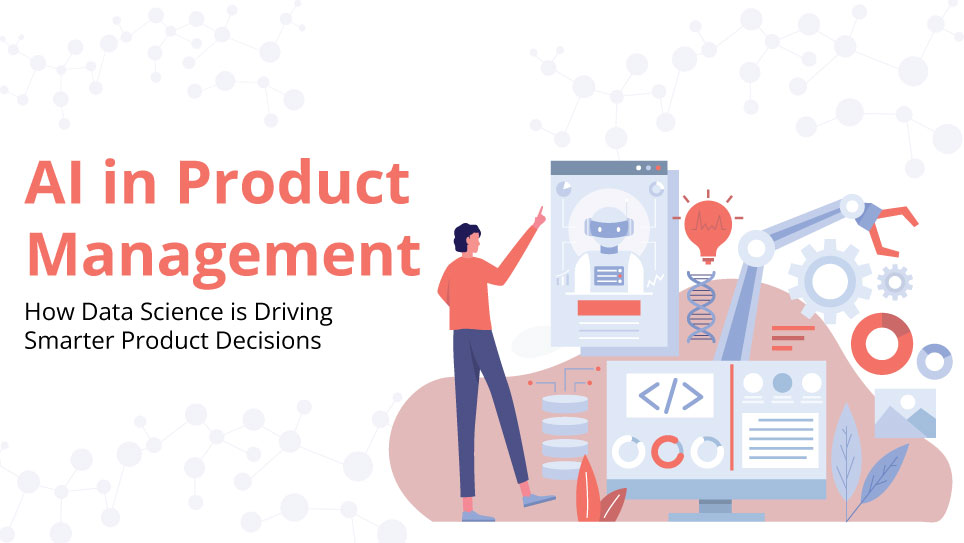
AI in Product Management has moved from hype to necessity. In 2025, 100% of product teams use AI tools, and 94% rely on them daily. From predictive models to automated user research, AI and data science for product managers are reshaping how products are built and scaled.
This shift isn’t just about technology; it’s about smarter, faster decisions. In this blog, we’ll cover:
- How product planning evolved into today’s AI-powered workflows
- How AI decision-making in business improves strategy and execution
- Where machine learning for product development fits in
- And how FX31 Labs helps companies adopt AI the right way
Whether you’re a startup founder, product manager, or enterprise leader, this guide will show why using AI in Product Management isn’t optional; it’s essential.
History of the Tech: From Gut Feel to Data-Driven Decisions
Product decisions once relied heavily on intuition, user interviews, and manual research. These traditional methods offered insights but were slow, narrow, and difficult to scale.
By the mid-2010s, things changed. The rise of big data and early product analytics tools allowed teams to track real user behavior. A/B testing, cohort analysis, and dashboards became part of the standard product toolkit. This shift gave rise to data science for product managers as a core capability.
The Lean Startup movement also pushed PMs to test MVPs with real users and iterate fast using measurable feedback, marking the transition from opinion-based to outcome-driven decisions.
The late 2010s saw early machine learning for product development, such as recommendation engines in e-commerce and media. But these tools were mostly siloed within data science teams, not used by PMs directly.
By the early 2020s, cloud computing and better algorithms democratized access to AI. Product managers now need data fluency to stay relevant. This laid the groundwork for today’s era of AI in Product Management, where data and algorithms drive everyday product choices.
Evolution & Modern Use: AI-Powered Product Management in 2025
In 2025, AI in Product Management is no longer optional. It’s core to how teams build, prioritize, and optimize products. AI now supports every phase of the product lifecycle, from research to roadmap to release.
Smarter, Faster Decisions
Modern product analytics tools use AI to flag anomalies, predict churn, and surface recommendations without manual digging. Product teams act on real-time insights instead of waiting for monthly reports. Decisions are based on millions of data points, not just gut feeling.
Daily Use of Data Science for Product Managers
- AI-Powered Research: NLP tools analyze customer feedback and support logs, instantly summarizing what users want. PMs save hours and get richer insights.
- Predictive Roadmaps: ML models forecast which features will drive engagement or revenue, guiding what to build next.
- Workflow Automation: Generative AI helps draft PRDs, user stories, and decks, saving product managers 30+ hours a month.
- Live Analytics: AI dashboards alert teams to sudden user behavior shifts and auto-segment audiences by risk or opportunity.
How the PM Role Has Changed
Today’s product managers collaborate with AI like another team member. Many organizations now pair PMs with data scientists or embed AI experts into product squads. As AI handles the analysis and repetitive tasks, PMs focus more on strategic direction and customer empathy.
Stats That Matter
- 100% of product teams now use AI tools.
- Nearly 50% rely on AI in their day-to-day work.
- 98% have restructured teams to better integrate AI.
AI has transformed the PM from an information processor to a strategic decision-maker, augmented, not replaced, by intelligent tools.
Business Application: Why AI-Driven Product Decisions Matter
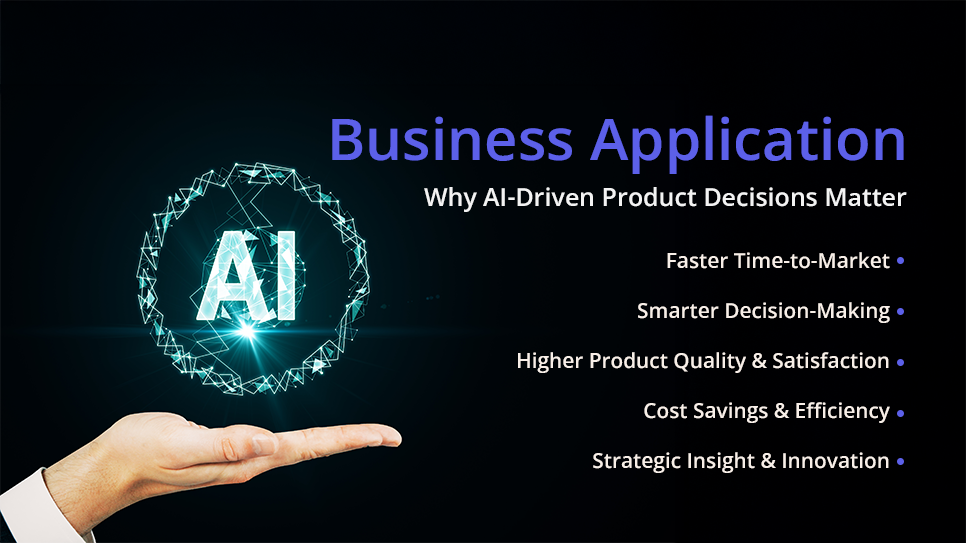
Why should product teams and business leaders care about AI in Product Management? Because AI enables faster, smarter, and more customer-aligned decisions, giving companies a real competitive edge.
- Faster Time-to-Market
AI and machine learning for product development help accelerate research, testing, and rollout. Studies show ML integration can reduce product timelines by 10–20%. Even small gains, like shipping two weeks earlier, can impact your market position. - Smarter Decision-Making
AI supports better prioritization by predicting outcomes like feature adoption or churn risk. This reduces guesswork and increases ROI. Teams spend less time debating and more time executing the right ideas. - Higher Product Quality & Satisfaction
AI-driven testing and personalization improve usability and engagement. Data science for product managers uncovers issues early and tailors experiences to user behavior, driving retention and long-term value. - Cost Savings & Efficiency
Automating analytics and reporting reduces manual work. AI helps identify minimal viable features, saving development time and cost. These gains add up, especially as teams scale. - Strategic Insight & Innovation
AI reveals patterns you can’t see manually, highlighting unmet user needs or new market opportunities. It empowers product teams to test bold ideas with data-backed confidence.
Companies using AI decision-making in business see faster cycles, better products, and smarter use of resources. In 2025, the real question isn’t whether you should adopt AI; it’s whether you’re using it as effectively as your competitors.
How FX31 Labs Helps with AI in Product Management
Adopting AI in Product Management takes more than just tools – it requires the right strategy, infrastructure, and mindset. FX31 Labs helps product teams integrate AI and data science for product managers in a way that’s practical, scalable, and aligned with business goals.
What We Do:
- AI Readiness & Strategy:
We assess your current setup and create a custom roadmap for AI decision-making in business, from predictive analytics to workflow automation. - Analytics & Infrastructure Setup:
We unify data from multiple sources, set up product analytics tools, and deliver dashboards that give PMs actionable insights in real time. - Custom AI/ML Models:
Our data science team builds tailored machine learning for product development models—like churn prediction or feature ranking—that go beyond generic tools. - Workflow Integration:
We embed AI into your daily PM processes, offering hands-on training so your team can confidently use AI insights in planning and execution. - AI Talent & Support:
Need extra help? Our experts join your team to design experiments, tune models, and provide ongoing guidance. - Ethical AI:
We ensure your AI systems are transparent, fair, and compliant with privacy standards, building trust across teams and users.
Whether you’re a founder, product manager, or enterprise leader, FX31 Labs helps you use AI in Product Management to make faster, smarter decisions.
Ready to bring AI into your product strategy?
Let FX31 Labs help you turn data into action and build smarter products.
Get in touch with us to get started.
FAQs
Q1: What is AI in Product Management, and why is it important?
AI in Product Management means that the product managers use AI tools such as machine learning models and automation to make quicker, data-driven product decisions. It allows product managers to sort out huge data, choose the important features, and give the users a personalized experience while the layer of human intervention is reduced. This results in much better and faster decisions, which will help to drive teams’ competitiveness.
Q2: How does data science for product managers differ from basic analytics?
Basic analytics displayed the current situation (usage trends, for instance). Data science revealed the cause of the current situation and the next steps. PMs would apply segmentation, A/B testing, and predictive models to get more in-depth insights and make smarter product selections based on the dashboard metrics, not just the numbers.
Q3: What are some AI-powered product analytics tools?
Amplitude, Mixpanel, Heap, and GA4 are some popular tools that leverage AI for:
- Auto-detecting unusual user behavior
- Predicting churn or engagement
- Natural language queries for faster insights
- Segmenting users for targeted features
So, these tools assist in the quick transformation of raw product data into actionable insights.
Q4: How does AI decision-making in business apply to product teams?
AI empowers the product teams working on feature prioritization, outcome forecasting, and goal alignment decisions. Assume an AI system predicts that Feature A might improve conversion by 5%. It aids in making decisions that are not only quicker but also more reliable at the same time. However, product managers still exercise their discretion regarding the aspects of strategy and ethics.
Q5: How is machine learning used in product development, and do small teams need a big setup?
ML aids various stages of the product life cycle – concept, design, and testing (improving UX by providing feedback), and after launch (monitoring users and tweaking features or retention strategies). Teams with limited resources can still use APIs and AI-enabled tools for the initial stages before investing in custom solutions and on-site data science.