
How Fintech Apps Are Transforming Digital Payments and Banking
Fintech apps are transforming digital payments and banking by enabling instant transactions, AI-driven financial insights, and seamless mobile banking experiences. Through fintech app development, companies are building secure, scalable platforms that allow users to send money, manage accounts, access loans, and invest digitally—making financial services faster, more accessible, and highly personalized.
Key Takeaways
- Fintech apps enable real-time digital payments, digital wallets, and automated financial services.
- Businesses are investing heavily in fintech app development to improve customer experience and financial accessibility.
- AI, blockchain, and open banking APIs are shaping the latest fintech technology trends.
- Modern financial apps combine advanced security, automation, and analytics.
- Fintech platforms are pushing traditional banks toward digital transformation.
Why Are Fintech Apps Reshaping Digital Payments?
Digital payments have evolved dramatically in the last decade. Consumers now expect fast, secure, and mobile-first financial services. This demand has accelerated fintech app development, allowing startups and financial institutions to build innovative financial platforms that operate entirely online.
Fintech applications enable instant money transfers, digital wallets, peer-to-peer payments, and automated financial services. These capabilities are powered by technologies such as artificial intelligence, APIs, and blockchain infrastructure.
In many countries, mobile-based payment ecosystems now process billions of transactions monthly, demonstrating how fintech solutions are replacing traditional cash and manual banking processes.
As a result, businesses investing in fintech software solutions are not only improving payment efficiency but also creating entirely new financial ecosystems.
What Is Fintech App Development?
Fintech app development refers to the process of building software applications that provide financial services digitally. These apps may include mobile banking platforms, digital wallets, lending systems, payment gateways, investment tools, and financial management solutions.
A typical fintech app development process involves:
| Stage | Description |
| Market Research | Identifying financial problems and user needs |
| Compliance Planning | Ensuring adherence to financial regulations |
| UI/UX Design | Creating intuitive financial interfaces |
| Core Development | Building backend architecture and APIs |
| Security Integration | Implementing encryption and fraud detection |
| Deployment & Scaling | Launching and optimizing performance |
Organizations investing in digital banking app development aim to deliver highly reliable financial experiences while maintaining strict compliance with financial regulations.
What Are the Most Important Fintech Mobile App Features?
Modern financial applications must balance usability, security, and performance. The most successful platforms integrate essential fintech mobile app features that enhance user experience and build trust.
Core Features of Fintech Applications
- Secure user authentication and KYC verification
- Digital wallets and instant payments
- AI-powered financial insights
- Budget tracking and analytics dashboards
- Multi-currency transactions
- Fraud detection and real-time alerts
- Integration with banking APIs
Security remains a critical priority. Fintech apps handle highly sensitive financial information, requiring encryption, secure APIs, and strict compliance with payment security standards.
These capabilities allow fintech platforms to provide fast, secure financial services while maintaining high levels of user confidence.
How Do Fintech Apps Improve Digital Banking?
Traditional banking systems were often slow, paper-heavy, and dependent on physical branches. Through digital banking app development, fintech platforms are modernizing the entire banking experience.
Traditional Banking vs Fintech Banking
| Feature | Traditional Banking | Fintech Apps |
| Account Setup | Branch visits required | Fully digital onboarding |
| Transactions | Processing delays | Instant transfers |
| Accessibility | Limited hours | 24/7 access |
| Data Insights | Limited visibility | Real-time analytics |
| Personalization | Generic services | AI-driven financial advice |
This transformation allows users to perform complex financial tasks—such as investing, budgeting, and sending cross-border payments—directly from their smartphones.
What Are the Latest Fintech Technology Trends?
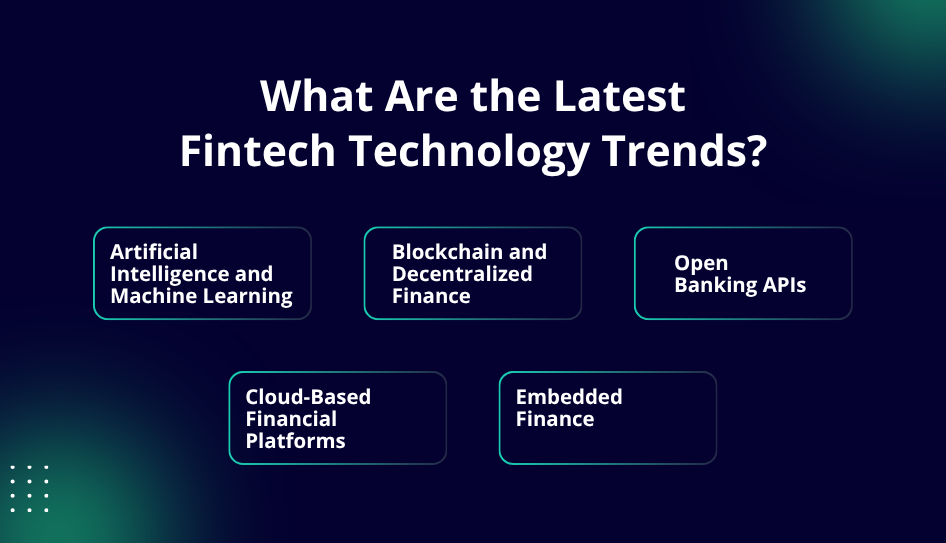
The fintech industry continues to evolve rapidly as new technologies reshape financial services. Businesses investing in fintech app development are adopting several emerging innovations.
Major Fintech Technology Trends
- Artificial Intelligence and Machine Learning
AI improves fraud detection, financial predictions, and personalized recommendations. - Blockchain and Decentralized Finance
Blockchain increases transparency and reduces transaction costs. - Open Banking APIs
Banks and fintech companies collaborate through shared data infrastructure. - Cloud-Based Financial Platforms
Cloud computing improves scalability and performance. - Embedded Finance
Financial services are integrated into non-financial platforms like e-commerce and mobility apps.
These fintech technology trends are accelerating innovation across banking, lending, insurance, and investment sectors.
How Can Businesses Build a Successful Fintech App?
Companies planning to launch financial products often follow a structured payment app development guide to ensure security, compliance, and scalability.
Essential Steps for Fintech Product Development
- Define the financial problem your app will solve
- Ensure regulatory compliance (KYC, AML, PCI DSS)
- Design a secure architecture and scalable infrastructure
- Build user-friendly mobile interfaces
- Integrate payment gateways and financial APIs
- Implement advanced security protocols
- Test thoroughly before launch
A well-planned payment app development guide ensures that fintech platforms remain reliable and compliant while delivering seamless user experiences.
Also Read:- Building Fintech Solutions with Industry-Specific Development Expertise
Why Businesses Are Investing in Fintech Software Solutions
Financial institutions, startups, and even non-financial companies are adopting fintech software solutions to remain competitive in a digital-first economy.
These solutions enable organizations to:
- Launch digital banking products faster
- Reduce operational costs
- Improve financial data insights
- Enable global payments and cross-border transactions
- Deliver highly personalized financial experiences
With financial services becoming increasingly digital, companies that invest in fintech app development are better positioned to meet evolving consumer expectations.
The Future of Fintech Apps
The next generation of fintech platforms will move beyond simple payment functionality. Future fintech ecosystems will integrate AI-driven financial advisors, automated investing, decentralized finance tools, and embedded financial services.
As businesses continue investing in fintech app development, the line between traditional banking and technology platforms will continue to blur. The result will be faster, more accessible, and more intelligent financial services worldwide.
FAQs
1. What is fintech app development?
Fintech app development is the process of creating digital applications that provide financial services such as payments, banking, lending, and investment management through mobile or web platforms.
2. Why are fintech apps important for digital payments?
Fintech apps enable instant transactions, digital wallets, and secure financial services, making payments faster, easier, and more accessible than traditional banking methods.
3. What are the essential fintech mobile app features?
Important fintech mobile app features include secure authentication, real-time payments, AI-driven financial insights, fraud detection, digital wallets, and integration with banking APIs.
4. How do fintech apps improve banking services?
Fintech apps simplify banking by allowing users to open accounts, transfer money, track spending, and access financial tools directly from their smartphones.
5. What technologies power modern fintech platforms?
Modern fintech platforms rely on artificial intelligence, blockchain, cloud computing, open banking APIs, and advanced cybersecurity technologies.