
AI Agents vs AI Chatbots: What’s the Difference for Businesses?
AI chatbots primarily respond to user queries using predefined flows or language models, while AI agents can autonomously plan, make decisions, and execute multi-step tasks across systems. Businesses investing in AI agent development gain systems that automate workflows, integrate tools, and continuously improve operations rather than simply answering questions.
Key Takeaways
- AI chatbots mainly answer questions and guide conversations.
- AI agents perform actions, automate workflows, and solve tasks independently.
- AI agents integrate with APIs, tools, and enterprise systems.
- Businesses are adopting AI automation agents to streamline operations.
- AI agent development enables intelligent decision-making across departments.
- Organizations can deploy intelligent AI systems to reduce operational workload and improve efficiency.
Why Are Businesses Talking About AI Agents Right Now?
Artificial intelligence is evolving rapidly. For years, chatbots handled basic customer service and FAQ responses. However, modern enterprises now require systems that can reason, plan, and execute tasks across multiple systems.
This is where AI agent development comes into play.
Unlike traditional bots, autonomous AI agents are designed to achieve goals rather than simply respond to prompts. They can analyze context, access company data, integrate with software tools, and automate complex workflows.
These capabilities are transforming how companies approach automation, productivity, and digital operations.
What Is an AI Chatbot?
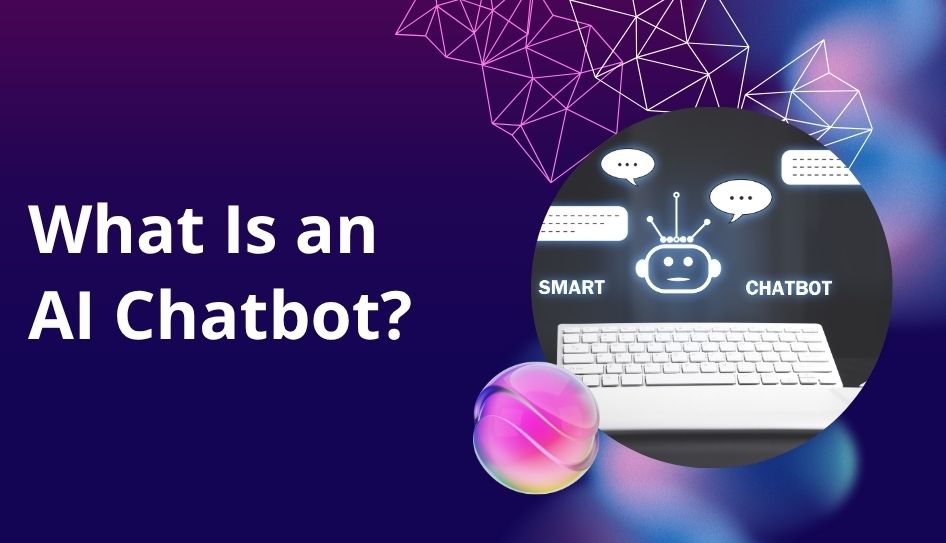
An AI chatbot is a conversational system designed to interact with users through text or voice. It typically uses predefined rules or natural language processing to answer questions and guide users through simple tasks.
Chatbots are ideal for structured interactions such as:
- Customer support queries
- FAQ responses
- Order tracking
- Appointment scheduling
- Product recommendations
While modern chatbots use large language models, they still function mainly as reactive systems — responding when users initiate a request.
Key Characteristics of AI Chatbots
| Feature | Description |
| Interaction style | Conversation-based |
| Autonomy | Low |
| Workflow complexity | Simple |
| Learning ability | Limited |
| Best use cases | Customer service, FAQs |
Chatbots remain valuable for businesses, but they often struggle with complex tasks requiring multi-step reasoning or system integration.
What Is an AI Agent?
An AI agent is an advanced software system capable of perceiving information, reasoning about goals, and taking actions autonomously. These systems can execute multi-step tasks, integrate tools, and continuously adapt to new inputs.
In practical terms, AI agents behave more like digital employees than conversational assistants.
For example, an AI agent can:
- Analyze incoming emails
- Extract key tasks
- Schedule meetings
- Update CRM records
- Send follow-up messages
All without requiring continuous human intervention.
This is why AI agent development is becoming a major focus for organizations seeking intelligent automation.
AI Agents vs AI Chatbots: Core Differences
The easiest way to understand the difference is to look at how each technology approaches tasks.
| Factor | AI Chatbots | AI Agents |
| Purpose | Answer questions | Achieve goals |
| Interaction | Reactive conversation | Proactive task execution |
| Workflow capability | Single-step responses | Multi-step reasoning |
| Integration | Limited | Deep system integration |
| Autonomy | Low | High |
| Business value | Customer support | End-to-end automation |
In simple terms:
- Chatbots talk
- AI agents act
Also Read:- Harnessing AI Agents: Transforming Business Operations with Intelligent Automation
How Do AI Automation Agents Work?
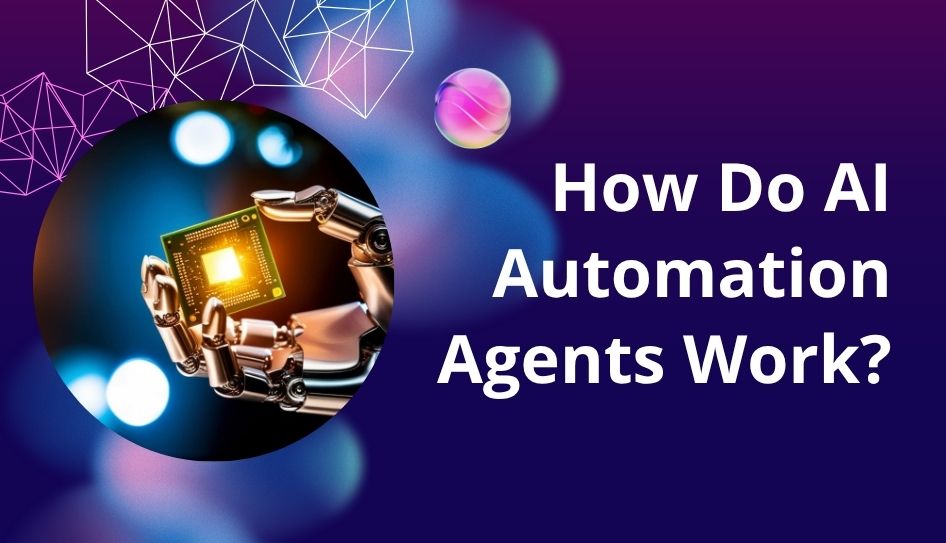
AI automation agents combine several technologies to execute tasks autonomously.
Key components typically include:
- Large Language Models (LLMs) for reasoning and communication
- Memory systems for context retention
- API integrations to access tools and databases
- Planning engines to break complex goals into tasks
This architecture allows AI agents for business processes to move beyond simple responses and actively manage workflows.
For example, an AI agent in finance might:
- Monitor transactions
- Detect anomalies
- Generate reports
- Notify stakeholders
- Trigger compliance checks
All automatically.
AI Agent Use Cases Across Industries
Businesses across industries are exploring AI agent use cases to automate complex operations.
Customer Support
AI agents can:
- Resolve support tickets
- Access customer records
- Escalate issues automatically
Sales and Marketing
Agents can analyze leads, personalize outreach, and update CRM systems.
Operations
Operational teams use AI automation agents to monitor supply chains, automate reporting, and manage workflows.
HR and Recruitment
Agents can screen resumes, schedule interviews, and track candidate progress.
Software Development
Development teams use AI agents to assist with debugging, code generation, and deployment automation.
These examples show how AI agent development is expanding beyond conversational interfaces into enterprise automation.
When Should Businesses Use AI Chatbots?
Despite the rise of AI agents, chatbots still serve valuable purposes.
Businesses should consider chatbots when they need:
- High-volume customer support
- FAQ automation
- Guided product discovery
- Simple customer engagement
Chatbots are typically faster to deploy and easier to manage for straightforward tasks.
When Should Businesses Invest in AI Agent Development?
Organizations should consider AI agent development when they need automation that goes beyond conversation.
Ideal scenarios include:
- Multi-step workflow automation
- Cross-platform system integrations
- Intelligent task orchestration
- Data-driven decision support
- Process optimization across departments
Companies building intelligent AI systems can significantly reduce manual workload and improve operational efficiency.
The Future of Autonomous AI Agents
The next generation of enterprise automation will likely revolve around autonomous AI agents working alongside humans.
Rather than replacing employees, these systems will augment teams by:
- Handling repetitive tasks
- Processing large datasets
- Automating operational workflows
- Supporting faster decision-making
As AI capabilities evolve, organizations will increasingly rely on AI agents for business processes to scale operations and innovate faster.
Conclusion
AI chatbots and AI agents both play important roles in modern digital ecosystems, but they serve very different purposes.
Chatbots excel at conversational interactions and basic customer support, while AI agents bring a new level of intelligence and automation to business operations.
Through AI agent development, organizations can deploy systems capable of reasoning, planning, and executing tasks autonomously. As businesses move toward advanced automation, these intelligent technologies will become a cornerstone of modern enterprise infrastructure.
FAQs
- What is the main difference between AI agents and chatbots?
The primary difference is autonomy. Chatbots mainly respond to user queries, while AI agents can plan, reason, and perform multi-step tasks independently.
- Are AI agents better than chatbots?
Not necessarily. Chatbots are effective for simple customer interactions, while AI agents are better suited for complex workflows and automation.
- What are AI agent use cases in business?
Common AI agent use cases include customer support automation, sales workflows, operational monitoring, HR recruitment assistance, and data analysis.
- How do autonomous AI agents work?
Autonomous AI agents combine language models, planning systems, memory, and software integrations to execute tasks automatically based on business objectives.
- Why are companies investing in AI agent development?
Businesses invest in AI agent development to automate workflows, improve productivity, reduce operational costs, and build scalable intelligent systems.